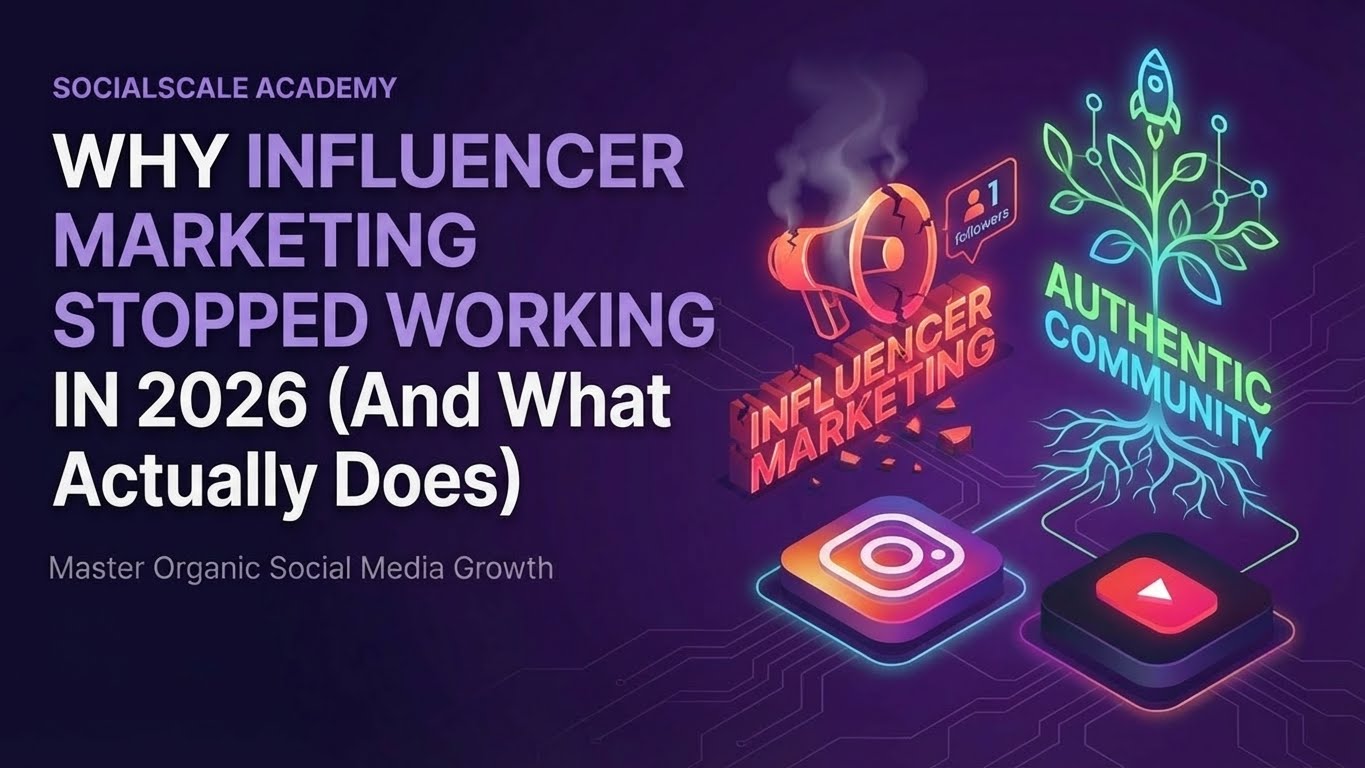
The Influencer Bubble Has Burst
The Engagement Gap Is Wider Than Ever
Start with the numbers that should make every marketing team rethink their celebrity budget. The Influencer Marketing Hub 2026 Benchmark Report pegs mega-influencer engagement (1M+ followers) at 1.21%, micro at 3.86%, and nano at 6.23%. The overall average sits at 2.39%. On short-form video the divide widens: TikTok engagement averages 4.25% while Instagram Reels barely clears 1.23%.
That's a 5x gap between community-scale creators and celebrities—and it's still growing as feeds fill with sponsored posts and viewers get better at pattern-matching an ad. You're paying premium rates for celebrity-level reach and getting bargain-basement attention.
The industry itself sees the shift. Nano-tier expansion intent runs at 51.43% versus 10% contraction, while macro-tier sentiment is basically flat (20.59% expansion, 20.58% contraction). Marketers are voting with their briefs.
Average Engagement Rate by Follower Tier (2026)
Source: Influencer Marketing Hub 2026 Benchmark Report
5x difference — the gap between celebrity and community-scale creators keeps widening
The Fake Followers Problem Has Gotten Worse
In February 2026, SociaVault Labs ran a 100,000-account audit across Instagram and TikTok and found 37.2% of influencer followers show signs of being fake, purchased, or inauthentic. Instagram's overall fraud rate came in at 41.8%; TikTok at 32.6%. And the fraud concentrates exactly where brand dollars tend to flow:
- Macro creators (100K–500K): 48.3% fraud rate
- Mega creators (500K+): 43.7%
- Nano creators (1K–10K): 27.6%
Global losses to influencer fraud are projected to hit $4.8B in 2026—a 269% jump from 2019, per LMG Media's 2026 industry report. Brands respond by demanding follower audits before signing, but bulk-purchase services and coordinated engagement pods keep slipping through. It's a game the buyer can't win, especially in the exact tiers where celebrity pricing lives.
One-Off Posts Don't Build Brands
Perhaps the biggest issue with traditional influencer marketing: it's a rental model. You pay for one post, it lives for 24-48 hours in feeds, then it's gone. No compounding effect. No lasting asset. Just an expense line item.
Compare that to owned organic content that continues generating views, followers, and customers for months after posting. One approach builds an asset. The other just burns cash.
Why Traditional Influencer Campaigns Fail
Why did my influencer post flop?
Audience mismatch. The influencer's followers aren't your customers. They followed for entertainment, lifestyle content, or the influencer's personality—not to discover products like yours. When they see sponsored content, it feels out of place.
Why don't influencer followers convert?
Trust is non-transferable. Their followers trust them, not you. When users see a sponsored post, they recognize it as an advertisement and their guard goes up. The 5x engagement gap between nano (6.23%) and mega (1.21%) creators in the 2026 Benchmark Report is that recognition showing up in the numbers.
Why is influencer ROI so hard to measure?
Attribution is a nightmare. A user might see an influencer post, not click, then search your brand three days later. iOS privacy changes have made tracking even harder. You're essentially guessing whether influencer spend drove any actual conversions.
Other factors killing celebrity-tier ROI in 2026:
Real Story: When Influencer Marketing Failed
Case Study: The $2,000 Lesson
Veridia, an e-commerce brand, was following the standard playbook. They hired an influencer with decent following for a sponsored post. Cost: $2,000. Result: 500 views.
That's $4 per view. For a single post that disappeared from feeds within 48 hours.
Meanwhile, after shifting to an organic multi-account strategy, they generated 42 million views in 90 days—at a fraction of the cost.
Influencer Campaign
500
views for $2,000
Organic Strategy
42M
views in 90 days
What Actually Works in 2026
It's Not That Influencer Marketing Died — The Celebrity Playbook Did
Two things can be true at once. Overall influencer spend is still growing—eMarketer projects US creator marketing to reach $13.7B by 2027, up from $10.5B in 2025. And the celebrity-tier model is collapsing. Budget is rotating hard toward nano/micro creators, UGC, and owned accounts, because those are the places where the numbers actually work.
User-generated content is the loudest signal. Per Influee's 2026 UGC report, people rate UGC 9.8x more impactful than influencer content when making purchase decisions, and 5.9x more authentic. UGC-driven campaigns lift conversion roughly 29% versus non-UGC creative. That's the same audience that scrolls past a $50K celebrity post stopping for a phone-shot clip from a customer.
Owned Distribution Beats Rented Reach
The next step past UGC is owning the distribution itself. When you run your own accounts, you control the messaging, the cadence, and every piece of first-party data. No middlemen. No follower-audit anxiety. No spend that vanishes after 48 hours in the feed.
Twenty-five accounts posting daily gives you 25 shots at organic virality—every single day. Compare that to one celebrity post that either works or it doesn't. For the operations side of running that many accounts safely, see our multi-account strategy guide and the 2026 tools decision guide.
Full Control
Your accounts, your content, your strategy. No middlemen or negotiations.
Compounding Returns
Content keeps working months later. Followers stick with you, not an influencer.
Better Attribution
Track exactly which accounts and content drive conversions.
Multiple Shots Daily
25 accounts = 25 opportunities to break through every single day.
Volume Strategy Over One-Shot Campaigns
The influencer model is built on hope: hope that this one expensive post will perform. The organic model is built on math: post enough quality content across enough accounts and something will break through.
It's the difference between buying a single lottery ticket and systematically building a business. One is gambling. The other is strategy.
The Math That Proves It
| Strategy | Cost | Avg engagement | Control | Compounds |
|---|---|---|---|---|
Mega-influencer post | $2,000+ | 1.21% | ||
Nano/micro creator | under $500 | 3.86–6.23% | ||
Owned multi-account | $90/mo per account | Your accounts, your data |
The bottom line: For the cost of one influencer post that might flop, you could have a month of systematic organic distribution with full control and compounding returns.
How to Make the Shift
Stop paying for one-off posts
They're expensive gambles with no lasting value. Redirect that budget.
Invest in owned distribution channels
Build accounts you control. Your audience, your content, your rules.
Focus on content volume over 'reach'
Twenty pieces of content > one influencer with fake engagement.
Build multiple touchpoints
Don't bet everything on one account. Diversify across accounts and platforms.
Track what matters
Actual conversions, not vanity metrics. Real customers, not follower counts.
The Bottom Line
- The celebrity-influencer playbook from 2020 doesn't work in 2026
- Mega-influencers deliver ~5x less engagement (1.21% vs 6.23%) than nano creators, per the 2026 Benchmark Report
- 37.2% of influencer followers are fake, with fraud concentrated in the exact tiers where premium budgets flow
- Rented reach is expensive and temporary; UGC and owned distribution compound
The shift from influencer marketing to owned organic distribution isn't just about cost—it's about building a sustainable competitive advantage. While others keep gambling on one-off posts, you could be building an organic machine that works for you 24/7.
Related reading: Why Paid Ads Are Failing in 2026 and How to Avoid Shadowbans